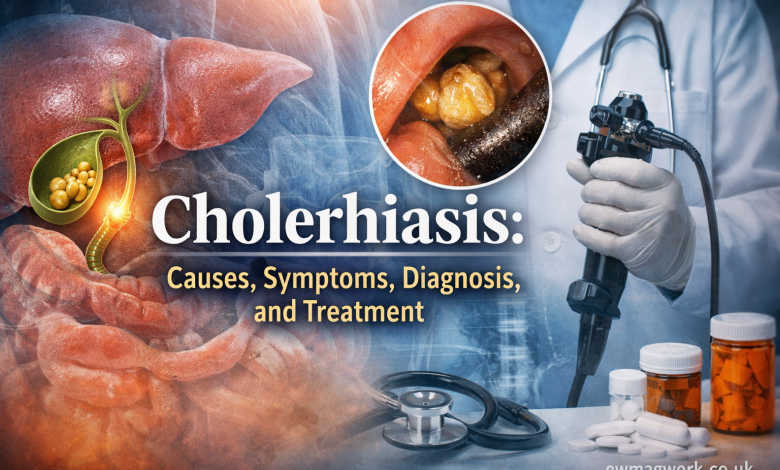
Cholerhiasis is a term that often appears in online searches when people experience unexplained abdominal pain, digestive discomfort, or are told they may have a problem related to gallstones. While the word itself is not commonly used in modern clinical textbooks, it is widely understood by patients and some practitioners as a general reference to gallstone disease, particularly stones that affect bile flow within the gallbladder or bile ducts. In medical language, this condition usually aligns with cholelithiasis, which refers to gallstones in the gallbladder, and choledocholithiasis, which describes stones that migrate into the common bile duct.
Understanding cholerhiasis matters because gallstone-related disorders are among the most common digestive conditions worldwide. Many people live with gallstones for years without symptoms, while others experience sudden and intense pain that disrupts daily life. This article explains cholerhiasis in clear, human language, covering how it develops, what symptoms to watch for, how doctors diagnose it, and what modern treatment looks like today.
What Is Cholerhiasis?
Cholerhiasis broadly refers to the presence of stones formed from bile components within the biliary system. Bile is a digestive fluid produced by the liver and stored in the gallbladder. It helps the body break down fats during digestion. When bile becomes chemically unbalanced, it can harden into stones. These stones may remain in the gallbladder or move into the bile ducts, where they can block the normal flow of bile.
In everyday usage, people use cholerhiasis as a general term for gallstone disease. From a clinical perspective, the location of the stones matters greatly. Stones confined to the gallbladder may cause intermittent pain or no symptoms at all. Stones that enter the bile ducts can trigger serious complications such as infection, jaundice, or pancreatitis. This distinction often determines how urgently treatment is required.
How Gallstones Form
Gallstones develop when bile contains too much cholesterol, too much bilirubin, or not enough bile salts to keep these substances dissolved. Over time, microscopic crystals can form and gradually grow into stones. These stones may be as small as grains of sand or as large as a golf ball.
Another key factor is gallbladder emptying. If the gallbladder does not empty completely or frequently enough, bile can sit for too long and become concentrated. This stagnant bile environment increases the risk of stone formation. For many people, this process happens silently, without any immediate symptoms.
Risk Factors Associated With Cholerhiasis
Several factors increase the likelihood of developing gallstones. Age plays a role, as the risk rises steadily after middle age. Biological sex is also important, with women experiencing gallstones more frequently than men, partly due to hormonal influences such as estrogen. Pregnancy can temporarily raise the risk for this reason.
Metabolic health strongly affects gallstone formation. Obesity, insulin resistance, and type 2 diabetes are commonly linked with gallstone disease. Rapid weight loss, especially from crash diets or certain bariatric surgeries, can also increase risk because it alters bile composition and gallbladder function.
Genetics should not be overlooked. People with a family history of gallstones have a higher chance of developing them, even when lifestyle factors are similar. Diet patterns low in fiber and high in refined carbohydrates may also contribute over time.
Symptoms of Cholerhiasis
Many people with gallstones never experience symptoms. These silent stones are often discovered incidentally during imaging for unrelated health concerns. However, when symptoms do occur, they can be memorable and distressing.
The most common symptom is biliary colic. This is a steady, intense pain felt in the upper right abdomen or the center of the abdomen just below the breastbone. The pain often begins after eating, especially a heavy or fatty meal. It may radiate to the right shoulder or upper back and can last from thirty minutes to several hours. Unlike typical stomach pain, biliary colic does not improve with bowel movements or antacids.
When stones block bile ducts for longer periods, more serious symptoms can appear. Fever, chills, nausea, vomiting, and yellowing of the skin or eyes indicate complications that require immediate medical attention. These symptoms suggest infection or inflammation within the biliary system.
Potential Complications
Cholerhiasis can progress beyond simple pain if bile flow remains obstructed. Acute cholecystitis occurs when the gallbladder becomes inflamed, often leading to persistent pain and fever. Choledocholithiasis refers to stones in the common bile duct and can cause jaundice and abnormal liver tests.
One of the most dangerous complications is cholangitis, an infection of the bile ducts that can spread quickly through the bloodstream. Another serious outcome is gallstone pancreatitis, where a stone blocks the pancreatic duct, triggering inflammation of the pancreas. These conditions are medical emergencies and underline why recurrent or worsening symptoms should never be ignored.
How Cholerhiasis Is Diagnosed
Diagnosis begins with a detailed medical history and physical examination. Doctors pay close attention to the pattern, location, and triggers of abdominal pain. Blood tests are often ordered to look for signs of infection, inflammation, or liver dysfunction.
Imaging plays a central role in confirming gallstone disease. Ultrasound is typically the first test because it is safe, quick, and highly effective at detecting gallstones within the gallbladder. If bile duct stones are suspected, more advanced imaging such as magnetic resonance cholangiopancreatography may be used to visualize the biliary tree in greater detail.
In some cases, endoscopic ultrasound or diagnostic endoscopy is required to clarify the diagnosis. These tools help doctors determine the exact location of stones and plan appropriate treatment.
Treatment Options for Cholerhiasis
Treatment depends on whether symptoms are present and where the stones are located. Asymptomatic gallstones usually do not require treatment. Instead, patients are monitored and advised on lifestyle measures that reduce the risk of future symptoms.
When gallstones cause repeated pain or complications, removal of the gallbladder is often recommended. Laparoscopic cholecystectomy is the most common approach today. It involves small incisions, minimal scarring, and a relatively quick recovery. Removing the gallbladder prevents future stone formation and eliminates the source of pain.
For stones in the bile ducts, a procedure called endoscopic retrograde cholangiopancreatography is commonly used. This technique allows doctors to remove stones without open surgery. In many cases, bile duct clearance is followed by gallbladder removal to prevent recurrence.
Medications that dissolve gallstones exist but are limited in effectiveness. They work slowly, are suitable only for specific types of stones, and stones often return once treatment stops. As a result, medication is usually reserved for patients who cannot undergo surgery.
Living With and Recovering From Gallstone Disease
Lifestyle adjustments can help reduce symptoms before treatment and support recovery afterward. Eating regular meals, avoiding extreme dieting, and choosing balanced meals can minimize gallbladder stress. After gallbladder removal, most people adapt well and resume normal eating habits within weeks.
Some individuals notice temporary digestive changes, such as loose stools or sensitivity to fatty foods. These effects usually improve as the body adjusts to the continuous flow of bile directly from the liver into the intestine.
Conclusion
Cholerhiasis, though not a formal medical term, represents a real and common health concern tied to gallstone disease. For many people, gallstones remain silent and harmless. For others, they become a source of recurring pain or serious complications that disrupt everyday life. The key to managing cholerhiasis lies in understanding symptoms, seeking timely medical evaluation, and choosing evidence-based treatment.
Modern medicine offers effective and safe solutions, from advanced imaging to minimally invasive procedures that restore quality of life. If abdominal pain keeps returning or is accompanied by fever or jaundice, it should be taken seriously. With proper care and informed decisions, most people affected by cholerhiasis can move forward with confidence and lasting relief.