Dracunculiasis, commonly known as Guinea worm disease, is one of the oldest parasitic infections known to humanity. For centuries it affected rural communities in parts of Africa and Asia where access to safe drinking water was limited. Today the disease is extremely rare thanks to decades of global eradication efforts. Yet understanding dracunculiasis symptoms remains important, especially for healthcare professionals, public health workers, and people living in or traveling to regions where the parasite has not been fully eliminated.
What makes Guinea worm disease unusual is its long incubation period and the dramatic symptoms that appear nearly a year after infection. The illness does not usually cause death, but it can cause severe pain and temporary disability. In affected communities this disability can prevent people from working, farming, or attending school. Recognizing the symptoms early can help prevent further spread of the parasite and ensure proper care for those infected.
What Is Dracunculiasis
Dracunculiasis is a parasitic disease caused by the worm Dracunculus medinensis. Humans become infected by drinking water contaminated with tiny water fleas known as copepods. These microscopic organisms may carry the larvae of the Guinea worm. Once swallowed, the larvae are released in the stomach and begin a slow process of development inside the body.
Over several months the larvae grow and mature. Male worms die after mating, but the fertilized female worm continues to grow, sometimes reaching lengths of up to one meter. Eventually the female migrates through body tissues toward the surface of the skin. This migration leads to the characteristic symptoms associated with the disease.
The entire process from infection to symptom appearance can take approximately ten to fourteen months. Because of this long delay, people often have no idea they were infected until the symptoms finally emerge.
Early Stage Symptoms of Dracunculiasis
In the early phase of infection, most individuals experience no symptoms at all. The parasite develops silently within the body, and the infected person may feel completely healthy during this period. This symptom-free stage is one of the reasons the disease historically spread easily in communities that relied on shared water sources.
As the worm approaches the skin, some people begin to experience mild warning signs. These may include itching or discomfort at the location where the worm will eventually emerge. In some cases, patients report swelling or redness before the blister forms. However, these early signs are often subtle and may go unnoticed.
Because the disease does not cause immediate illness, individuals may continue their daily activities without realizing that a parasite is growing inside their body.
The Most Recognizable Dracunculiasis Symptoms
The hallmark symptom of Guinea worm disease is the appearance of a painful blister on the skin. This blister usually forms on the lower legs or feet, although it can occasionally appear on other parts of the body such as the arms or torso.
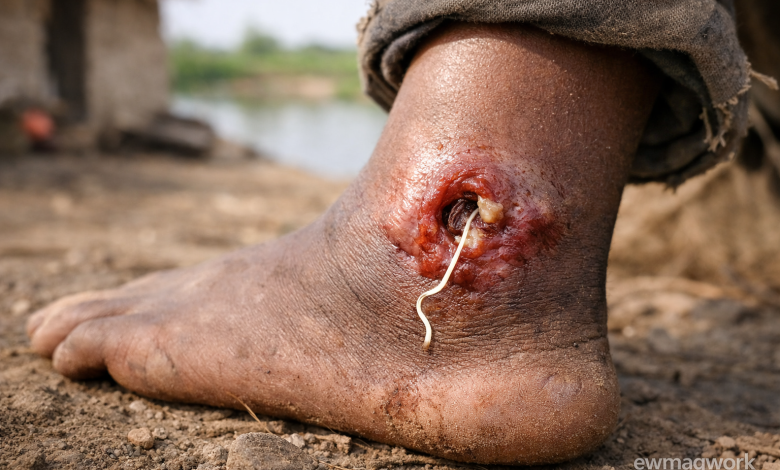
The blister causes an intense burning sensation. Many patients describe the pain as severe and persistent. As the blister grows, it eventually bursts and creates an open sore or ulcer. At this stage, the head of the worm may become visible within the wound.
Once the worm begins to emerge, the process can take several days or even weeks. The worm slowly exits the body through the ulcer. This stage is extremely painful and can limit movement, particularly if the lesion appears on the foot or leg. In rural communities where walking is essential for daily tasks, this symptom can be particularly disabling.
Pain and Burning Sensation During Worm Emergence
One of the most distressing dracunculiasis symptoms is the intense burning sensation associated with the emerging worm. Patients often feel compelled to place the affected limb in water to relieve the discomfort. Unfortunately, this reaction contributes to the spread of the disease.
When the wound is immersed in water, the worm releases thousands of microscopic larvae into the water source. These larvae are then consumed by copepods, restarting the infection cycle. For this reason, infected individuals are advised to avoid contact with drinking water sources while the worm is emerging.
The burning sensation can last for days and sometimes weeks until the entire worm has been removed from the body.
Secondary Symptoms and Complications
Although the emerging worm is the primary symptom of dracunculiasis, other complications can occur during the infection. Open wounds created by the blister and ulcer make it easier for bacteria to enter the body. This can lead to secondary bacterial infections that cause additional swelling, redness, and pain.
In some cases, infected individuals may develop fever or general weakness as the body responds to the infection. Joint stiffness can also occur if the worm emerges near a joint, making movement difficult. These complications can extend the recovery period and increase the level of discomfort experienced by the patient.
Some people may also have multiple worms emerging at the same time. When this happens, the symptoms become even more debilitating and the healing process can take longer.
How Dracunculiasis Is Treated
There is currently no specific medicine that kills the Guinea worm inside the body. Treatment focuses on carefully removing the worm and preventing complications. The traditional method involves slowly pulling the worm out over several days by wrapping the exposed portion around a small stick or piece of gauze.
This process must be done gently and gradually to avoid breaking the worm. If the worm breaks during removal, the remaining portion inside the body can cause inflammation and infection. Healthcare workers often clean the wound regularly and apply bandages to prevent contamination.
Pain management and antibiotics may also be used when necessary. With proper care, most patients eventually recover once the worm has been completely removed and the wound heals.
Why Dracunculiasis Symptoms Can Cause Disability
Even though Guinea worm disease rarely leads to death, its symptoms can severely affect daily life. The intense pain and open wounds often make walking difficult or impossible. In communities that depend on agriculture or manual labor, this temporary disability can have serious economic consequences.
Children infected with the parasite may miss school for weeks while recovering. Adults may be unable to work or provide for their families during the healing period. These social and economic impacts are part of the reason global health organizations have prioritized eliminating the disease.
The burden of dracunculiasis is therefore not only medical but also social. The symptoms can disrupt entire households and communities when several people become infected at the same time.
Global Efforts to Eliminate Guinea Worm Disease
Dracunculiasis once affected millions of people each year across multiple continents. However, international eradication programs have dramatically reduced the number of cases. Public health initiatives focus on providing safe drinking water, filtering contaminated water, and educating communities about preventing infection.
These efforts have brought the world closer to eliminating the disease entirely. Only a small number of human cases are reported each year, mainly in a few regions of Africa. Continued vigilance is necessary because even a single untreated case can restart transmission in vulnerable communities.
Education about dracunculiasis symptoms remains an essential part of eradication programs. When individuals recognize the signs early and avoid contaminating water sources, the life cycle of the parasite can be interrupted.
Read Also: Urgent Dental Care for Fast Pain Relief Solutions
Conclusion
Dracunculiasis symptoms are distinctive and deeply painful, making Guinea worm disease one of the most recognizable parasitic infections in medical history. The illness begins silently, often remaining unnoticed for nearly a year after infection. Eventually it reveals itself through a painful blister and the slow emergence of a long parasitic worm through the skin.
Although the disease is rarely fatal, it can cause severe discomfort and temporary disability. Complications such as bacterial infection and joint pain can prolong recovery and disrupt everyday life. Treatment focuses on careful removal of the worm and proper wound care until healing occurs.
Today the world stands close to eradicating Guinea worm disease thanks to global public health efforts and community awareness. Understanding dracunculiasis symptoms remains vital because early recognition helps protect both the infected individual and the wider community. With continued education, safe water initiatives, and surveillance, the final cases of this ancient disease may one day disappear completely.