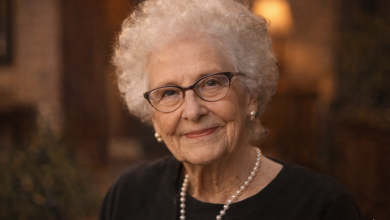
Some writers leave behind stories. Others leave behind a way of seeing the world. Alison Leslie Gold belonged to the latter. Her work was never about attention or literary spectacle. Instead, it was about listening carefully, writing truthfully, and preserving voices that history could have easily lost.
Best known for co-authoring Anne Frank Remembered with Miep Gies, Gold helped reshape how millions understand one of the most documented yet deeply human stories of the Holocaust. But her contribution goes far beyond a single book. Over decades, she built a body of work rooted in memory, survival, and the fragile but essential act of telling the truth.
This biography explores her life, her work, and the quiet but lasting impact she made on literature and historical understanding.
Early Life and Background
Alison Leslie Gold was born in the United States and grew up in New York, a city known for its diversity, energy, and cultural depth. While details of her early life remain relatively private, it is clear that her upbringing shaped her sensitivity toward human stories and complex histories.
From an early age, Gold showed an interest in literature and storytelling. However, unlike many writers who pursue fiction as an escape, Gold gravitated toward narratives grounded in real life. She was drawn to voices that had been overlooked or silenced, particularly those connected to history’s darker chapters.
This early inclination would later define her entire career.
The Breakthrough: Anne Frank Remembered
Alison Leslie Gold’s most recognized work came through her collaboration with Miep Gies, the Dutch woman who helped hide Anne Frank and her family during World War II.
Anne Frank Remembered was not just another book about Anne Frank. It shifted the perspective. Instead of focusing solely on Anne’s diary, it told the story through the eyes of someone who lived the danger daily, someone who risked everything to help others survive.
Gold played a crucial role in shaping this narrative. She transformed Gies’s memories into a coherent, deeply moving account that remained authentic to her voice. This required both literary skill and emotional intelligence. Writing about trauma and survival is never simple. It demands care, accuracy, and restraint.
The book became an international bestseller and was translated into multiple languages. More importantly, it expanded the public’s understanding of the Holocaust. Readers began to see not only the victims but also the helpers, the silent resistors, and the everyday courage that often goes unnoticed in history books.
A Writer of Witness and Survival
After the success of Anne Frank Remembered, Alison Leslie Gold continued to explore themes of memory and survival. Her work consistently focused on individuals who lived through extraordinary circumstances and carried those experiences into later life.
One of her notable works, Fiet’s Vase and Other Stories of Survival, brought together personal accounts from people who endured World War II. These stories did not follow a single narrative. Instead, they offered a mosaic of experiences—each one unique, yet connected by the shared reality of survival.
Gold approached these stories with humility. She did not try to dominate the narrative. Instead, she allowed the voices of survivors to lead, guiding readers through moments of fear, resilience, and reflection.
Her ability to balance narrative structure with authenticity became a defining feature of her writing.
Expanding Perspectives Through Personal Histories
Gold also worked on Hannah Goslar Remembers, which tells the story of a childhood friend of Anne Frank. This book provided a different lens on a well-known historical figure.
By focusing on someone close to Anne, Gold revealed aspects of life that are often missing from widely known narratives. She showed how history affects not just one central figure but entire networks of relationships.
This approach made her work richer and more layered. It reminded readers that history is never isolated. It is lived collectively, experienced differently by each individual involved.
Venturing Into Fiction: The Devil’s Mistress
While much of Alison Leslie Gold’s work is rooted in nonfiction, she also explored fiction. Her novel The Devil’s Mistress demonstrated her ability to engage with history through imagination.
In this work, Gold examined darker psychological themes and moral complexities. Fiction allowed her to explore questions that are not always easily addressed through factual accounts. It gave her the freedom to dive deeper into human behavior, particularly in extreme circumstances.
The novel received critical recognition and showed that Gold was not limited to one genre. She was a versatile writer capable of moving between fact and fiction while maintaining depth and seriousness.
The Personal Turn: Found and Lost
Later in her career, Alison Leslie Gold turned inward with her memoir Found and Lost. This marked a significant shift in her writing.
For years, she had focused on telling other people’s stories. In this memoir, she explored her own life, reflecting on memory, identity, and personal relationships.
The book is written in a reflective, almost intimate tone. It feels like a conversation across time, addressing both the living and those who are no longer present.
This transition from observer to subject added a new dimension to her work. It revealed the emotional depth behind her long-standing interest in memory and storytelling.
Writing Style and Literary Approach
Alison Leslie Gold’s writing style is best described as clear, thoughtful, and deeply respectful. She avoided unnecessary complexity and focused on conveying meaning with precision.
Her sentences are accessible, but they carry emotional weight. She understood that powerful stories do not require elaborate language. They require honesty.
Another key aspect of her style is restraint. Gold did not dramatize events for effect. Instead, she trusted the strength of real experiences to speak for themselves.
This approach made her work widely accessible while maintaining literary quality. It also ensured that the people whose stories she told remained at the center of the narrative.
Life Beyond Writing
Alison Leslie Gold lived between New York City and Hydra, Greece. This dual setting reflects a life that balanced intensity with reflection.
New York offered cultural richness and intellectual energy. Hydra, on the other hand, provided a quieter environment, allowing space for contemplation and writing.
This balance may have influenced her work. It gave her both the stimulation needed for storytelling and the calm required for deep reflection.
Legacy and Passing
Alison Leslie Gold passed away in September 2025 at the age of 80. While her passing did not dominate global headlines, her influence remains strong in literary and educational circles.
Her books continue to be read in classrooms and by individuals seeking a deeper understanding of history and human resilience.
Her legacy lies not only in what she wrote but in how she wrote it. She demonstrated that storytelling can be both accessible and meaningful, both emotional and intellectually grounded.
Why Alison Leslie Gold Still Matters Today
In a world where information is abundant but attention is limited, Alison Leslie Gold’s work stands out for its clarity and sincerity.
She reminds us that history is not just a collection of dates and events. It is a collection of human experiences—each one carrying lessons, emotions, and truths.
Her writing encourages readers to slow down, to listen, and to understand. It challenges us to look beyond the surface and consider the deeper layers of human life.
This relevance ensures that her work will continue to resonate with future generations.
Read Also: Melissa Esplana: The Private Life Behind a Baseball Legacy
Conclusion
Alison Leslie Gold’s life and career reflect a quiet but powerful commitment to truth. She was not a writer who sought the spotlight. Instead, she focused on giving it to others—those whose stories needed to be heard.
Through her work, she preserved memories that might have been forgotten. She expanded our understanding of history and deepened our appreciation for the individuals who lived through it.
Her legacy is one of integrity, empathy, and lasting impact. In every page she wrote, there is a sense of care—a reminder that storytelling, when done right, can change how we see the world.
Alison Leslie Gold may no longer be here, but her words continue to speak. And in those words, the past remains alive, meaningful, and deeply human.