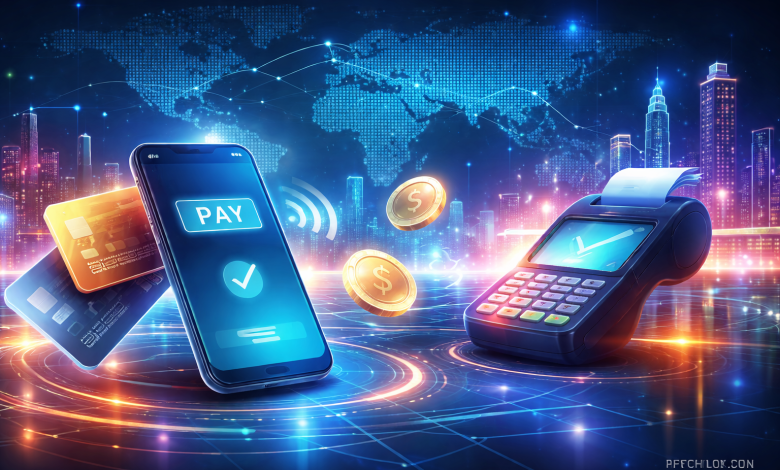
The way we pay has changed more in the last decade than in the fifty years before it. What once required a physical card, a signature, or a stack of cash now happens in seconds with a tap, scan, or invisible background authorization. Payments news in 2026 reflects that transformation. It is no longer a narrow financial services topic. It sits at the center of commerce, technology, regulation, cybersecurity, and even geopolitics.
For business owners, the stakes are practical. Faster settlement improves cash flow. Lower friction boosts conversion. Smarter fraud tools protect margins. For consumers, the change feels personal. Payments are woven into daily life, from ride-hailing and grocery apps to subscription streaming and instant transfers to family members.
Yet behind every seamless tap is a complex network of rails, rules, risk models, and regulation. The headlines may seem fragmented, but together they tell one story: payments are becoming faster, more digital, more regulated, and more strategic than ever before.
The Rise of Real-Time Payments as a Global Standard
If one theme dominates payments news today, it is speed. Real-time payments are no longer an innovation reserved for early adopters. They are quickly becoming the baseline expectation.
In many countries, instant bank-to-bank transfers are now available around the clock. That shift has changed how people think about money. When funds arrive in seconds rather than days, waiting feels outdated. Refunds are expected immediately. Payroll cycles are reimagined. Gig workers demand faster payouts. Small businesses rely on instant settlement to manage daily operations.
The psychological shift may be more important than the technical one. Once consumers experience instant transfers, anything slower feels broken. That expectation pressures banks and fintech firms to upgrade infrastructure and reduce friction without compromising security.
However, real-time payments also create new risks. When funds move instantly, reversing fraudulent transactions becomes far more difficult. This has forced institutions to invest heavily in real-time fraud detection and stronger authentication mechanisms. Speed without safeguards is no longer acceptable.
Fraud in the Age of Instant Money
Fraud remains one of the most urgent topics in payments news. While technology has improved, so have the tactics of criminals.
Traditional card fraud relied heavily on stolen credentials. Today, the threat has evolved. Social engineering scams, where individuals are manipulated into authorizing transactions themselves, are increasing in scale and sophistication. Criminals impersonate banks, delivery services, or even family members. They exploit urgency and emotion rather than technical vulnerabilities.
This shift has forced a change in defensive strategy. Institutions now focus not only on detecting unusual transactions but also on identifying unusual behavior patterns. Machine learning models analyze device signals, transaction timing, typing behavior, and account history in real time.
The challenge is balance. Too much friction harms legitimate customers. Too little invites losses. Payments leaders in 2026 understand that fraud prevention is not just a compliance function. It is a customer experience strategy. Trust is the true product.
Artificial Intelligence Becomes Core Infrastructure
Artificial intelligence has moved from experimentation to infrastructure. In payments news coverage, AI is no longer framed as optional innovation. It is presented as a necessity.
AI systems now power fraud detection, transaction routing, authorization optimization, and customer support automation. They help reduce false declines, which cost merchants billions in lost sales each year. They also improve approval rates by intelligently assessing risk across vast datasets.
Yet the conversation is shifting. Stakeholders are asking harder questions about transparency and accountability. Regulators want to understand how automated decisions are made. Consumers expect clarity when disputes arise. Explainable AI has become more than a technical goal; it is a reputational safeguard.
Companies that treat AI as a strategic layer rather than a marketing label are pulling ahead. They invest in governance frameworks, data integrity, and measurable performance outcomes. In a slower growth environment, efficiency gains driven by AI can define competitive advantage.
Digital Wallets Redefine Consumer Relationships
Another major trend dominating payments news is the expansion of digital wallets. What began as a convenient way to store cards has evolved into a broader commerce ecosystem.
Wallets now combine payments, identity verification, loyalty programs, ticketing, and even financing options. For many consumers, the wallet interface is the primary gateway to commerce. The underlying bank relationship becomes secondary, often invisible.
This shift changes power dynamics. Technology companies that control wallet interfaces gain influence over data, customer engagement, and transaction flow. Banks, meanwhile, must compete to remain relevant within these ecosystems.
Interoperability remains a central challenge. Consumers expect wallets to work across borders, devices, and merchants. Achieving that seamless experience requires coordination between networks, regulators, and financial institutions.
The wallet race is not just about convenience. It is about owning the daily customer touchpoint. In payments, proximity equals power.
Stablecoins and the Search for Efficient Cross-Border Payments
Cryptocurrency once dominated payments headlines with volatility and speculation. In 2026, the tone has matured. The focus has shifted toward stablecoins and regulated digital assets designed for real-world payment use cases.
Stablecoins, pegged to fiat currencies, offer the potential for faster and cheaper cross-border transactions. They promise reduced settlement times and fewer intermediaries. For multinational companies managing global supply chains, that proposition is compelling.
However, adoption hinges on regulation and trust. Governments and central banks are developing clearer frameworks for issuance, reserves, and consumer protections. Businesses want assurance that digital tokens are fully backed and redeemable.
The future of stablecoins in mainstream payments depends on measured experimentation rather than hype. Early pilots will determine whether they remain niche instruments or become integrated settlement tools.
Regulation Tightens as Innovation Accelerates
Payments innovation moves quickly, but regulation often follows closely behind. In recent years, policymakers have strengthened rules around authentication, consumer protection, and operational resilience.
The emphasis is shifting from compliance checklists to measurable outcomes. Regulators want to see reduced fraud rates, stronger dispute handling, and clearer disclosures. They are also increasingly focused on competition and access, ensuring that non-bank players can participate responsibly in the ecosystem.
For companies, compliance is no longer a back-office burden. It is a strategic requirement. Failing to meet regulatory expectations can damage brand reputation and customer trust overnight.
At the same time, collaboration between regulators and industry participants is improving. Sandboxes and pilot programs allow innovation to proceed under supervised conditions. This approach reflects a broader recognition that payments modernization is inevitable, and oversight must evolve alongside it.
The Economics of Payments: Growth Slows, Strategy Deepens
While transaction volumes continue to rise globally, revenue growth has moderated compared to the surge experienced during the digital acceleration of the early 2020s.
Higher interest rates, margin compression, and increased competition have made efficiency critical. Payment providers are reassessing cost structures, investing in automation, and seeking diversified revenue streams such as embedded finance and value-added services.
Embedded payments represent a particularly powerful shift. Instead of directing customers to separate checkout pages, companies integrate payment capabilities directly into platforms and applications. This reduces friction and increases conversion.
However, embedded finance also distributes risk. Platforms that integrate payment solutions must manage compliance, security, and dispute resolution responsibilities carefully.
The result is a more disciplined industry. Innovation continues, but profitability and resilience are under sharper scrutiny.
What Consumers and Businesses Notice Most
Amid infrastructure upgrades and regulatory debates, everyday users experience payments change in simple ways. Refunds arrive faster. Payment confirmations appear instantly. Biometric authentication replaces passwords. Cross-border purchases feel less complicated.
Businesses, meanwhile, monitor approval rates, chargebacks, and settlement times with new intensity. Payments are no longer treated as a background utility. They are a lever for growth.
The most successful organizations approach payments as part of their brand promise. They invest in transparency around fees. They communicate clearly about security. They respond quickly when issues arise.
In a world where money moves in seconds, patience is scarce. Companies that respect that reality earn loyalty.
The Road Ahead for Payments News
Looking forward, several forces will continue to shape headlines. Artificial intelligence will become more deeply embedded in risk and compliance functions. Cross-border interoperability will remain a priority for multinational commerce. Real-time payments adoption will expand further into business-to-business use cases.
Cybersecurity threats will evolve alongside technological progress. Collaboration across networks, banks, and governments will become even more essential.
Most importantly, the balance between speed and safety will define the industry’s next chapter. Consumers expect both. Delivering one without the other is no longer acceptable.
Read Also: Timothy Shalloway Movies Guide
Conclusion
Payments news in 2026 tells a story of acceleration and responsibility. Technology has made moving money faster and more convenient than ever before. Real-time rails, AI-driven risk models, digital wallets, and regulated digital assets are reshaping global commerce.
Yet with speed comes vulnerability. Fraud tactics adapt. Regulatory scrutiny intensifies. Trust becomes fragile.
The future of payments will not be defined solely by innovation. It will be defined by balance. The institutions that succeed will combine cutting-edge technology with rigorous governance and transparent communication. They will treat security as a product feature and compliance as a strategic asset.
For consumers and businesses alike, the goal remains simple: move money quickly, safely, and confidently. In that pursuit, payments news is not just industry chatter. It is a reflection of how modern economies function and how trust is built in a digital world.