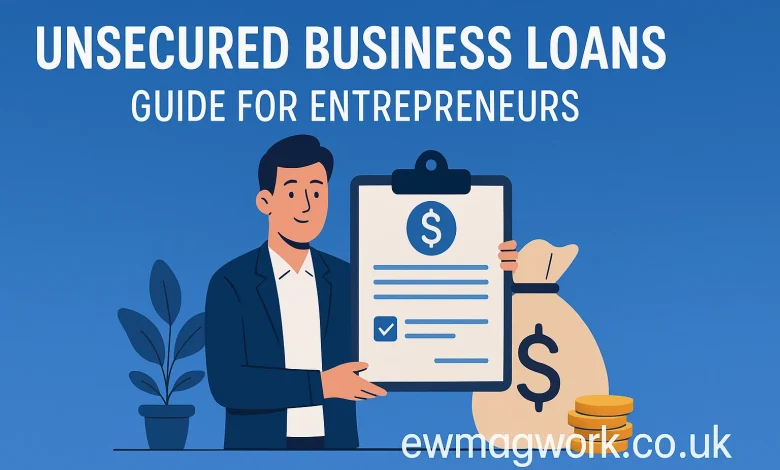
In today’s fast-paced business environment, unsecured business loans have become a vital financial tool for entrepreneurs and small to medium-sized enterprises (SMEs). Unlike secured loans, which require collateral such as real estate or equipment, unsecured loans rely primarily on the borrower’s creditworthiness and business performance. This distinction allows business owners without significant assets to access capital quickly, but it comes with higher interest rates and stricter approval requirements.
This article provides an in-depth look at unsecured business loans, covering their benefits, risks, eligibility requirements, application processes, real-world examples, and expert strategies for optimizing their use. By the end, you will understand how to leverage unsecured business loans to support growth, manage cash flow, and scale your business efficiently.
What Are Unsecured Business Loans?
Unsecured business loans are financing options that do not require collateral. Traditional loans often use assets such as property, equipment, or inventory as security. Unsecured loans, however, rely on the business’s creditworthiness, financial health, and sometimes personal credit scores of the owners.
Key Features of Unsecured Business Loans
- No collateral required: The loan is granted based on the borrower’s financial credibility.
- Flexible use of funds: Ideal for working capital, inventory purchase, marketing campaigns, or expansion.
- Shorter approval time: Since there’s no collateral verification, funding is usually faster.
- Higher interest rates: Lenders take on more risk, reflected in the loan cost.
- Smaller loan amounts: Typically, these loans are smaller than secured alternatives.
Advantages of Unsecured Business Loans
1. Quick Access to Capital
One of the primary advantages is speed. Businesses can receive funding in a few days or weeks, depending on lender requirements.
2. No Risk to Assets
Since no collateral is required, the business’s assets are safe even if repayment issues arise.
3. Flexible Financing Options
Funds can be used for multiple purposes, from managing cash flow gaps to launching new products.
4. Builds Business Credit
Timely repayment helps establish or improve a business’s credit score, which can unlock more favorable financing options in the future.
Risks and Disadvantages
1. Higher Interest Rates
Without collateral, lenders compensate for increased risk through higher rates, which can affect long-term profitability.
2. Lower Borrowing Limits
Most unsecured loans have caps significantly lower than secured loans, often limiting large-scale expansion plans.
3. Stricter Approval Criteria
Lenders scrutinize credit history, cash flow, and sometimes personal guarantees.
4. Potential for Personal Liability
Some lenders require personal guarantees, putting the owner’s personal credit on the line.
Types of Unsecured Business Loans
1. Term Loans
Lump-sum funds repaid over a fixed period with set interest rates.
2. Lines of Credit
Flexible borrowing option up to a maximum limit; interest only on the funds used.
3. Business Credit Cards
Short-term financing with revolving credit; useful for daily operations and smaller expenses.
4. SBA Express Loans (US-specific)
Small Business Administration-backed loans offering faster approval with unsecured options for smaller amounts.
5. Online Lenders and Fintech Platforms
These lenders specialize in fast, unsecured financing with streamlined digital applications.
Eligibility Criteria
Eligibility varies by lender, but common requirements include:
- Established business history: Typically 1–2 years in operation.
- Revenue requirements: Minimum monthly or annual revenue.
- Good credit score: Personal and business credit scores are considered.
- Debt-to-income ratio: Shows ability to repay the loan.
- Business plan or financial projections: Especially for startups.
How to Apply for an Unsecured Business Loan
Step 1: Assess Your Needs
Determine the exact amount and purpose of the loan.
Step 2: Evaluate Creditworthiness
Check personal and business credit scores to anticipate approval likelihood.
Step 3: Compare Lenders
Consider banks, online lenders, credit unions, and fintech platforms. Compare interest rates, repayment terms, and fees.
Step 4: Prepare Documentation
Typical documents include:
- Financial statements (income, balance sheet, cash flow)
- Tax returns
- Bank statements
- Business licenses
Step 5: Submit Application
Online platforms often provide faster approval, while banks may require more comprehensive review.
Step 6: Review Terms Carefully
Check APR, repayment schedule, penalties for late payments, and any personal guarantees required.
Market Trends and Insights
- Rising demand for quick capital: SMEs increasingly prefer unsecured loans for faster access.
- Growth of online lenders: Fintech platforms now provide competitive interest rates and faster approvals.
- Post-pandemic recovery: Businesses are leveraging unsecured financing to stabilize operations.
- Regulatory changes: Lending policies are evolving to encourage SME growth.
Real-World Case Studies
Case Study 1: Startup Expansion
A tech startup in Austin, Texas, secured a $50,000 unsecured business loan to hire software developers and launch a marketing campaign. Within six months, revenue increased by 40%, enabling repayment ahead of schedule.
Case Study 2: Cash Flow Management
A retail business in Chicago used an unsecured line of credit to manage seasonal inventory purchases. The flexible repayment and revolving credit helped maintain steady operations without risking assets.
Strategies to Optimize Unsecured Business Loans
1. Maintain Strong Credit
A high credit score improves approval chances and lowers interest rates.
2. Borrow Only What You Need
Avoid overborrowing to minimize interest costs and repayment stress.
3. Repay Promptly
Timely repayment enhances credibility and future financing opportunities.
4. Negotiate Terms
Some lenders may offer lower rates or extended repayment schedules based on business history.
5. Leverage for Growth
Use loans for initiatives that drive revenue rather than operational costs alone.
Expert Opinions
According to financial advisors at Forbes Finance Council, “Unsecured business loans are an excellent option for SMEs that need fast capital but lack collateral. However, business owners must evaluate the cost of borrowing and repayment capacity to avoid financial strain.”
Common Myths About Unsecured Business Loans
- Myth 1: They are easy to get. Approval still depends on creditworthiness and financial health.
- Myth 2: They carry no risk. High interest rates and personal guarantees can create significant obligations.
- Myth 3: Only small amounts are available. While generally smaller, some lenders offer substantial unsecured loans for well-established businesses.
Conclusion
Unsecured business loans offer a flexible and accessible financing solution for businesses that need quick capital without risking assets. They are ideal for short-term funding, managing cash flow, and supporting growth initiatives. However, higher interest rates, lower borrowing limits, and stricter credit requirements necessitate careful consideration.
Entrepreneurs should evaluate their financial situation, compare lenders, and use unsecured loans strategically to maximize benefits. By understanding the risks and advantages, business owners can make informed decisions and leverage unsecured business loans as a stepping stone to sustainable growth.